
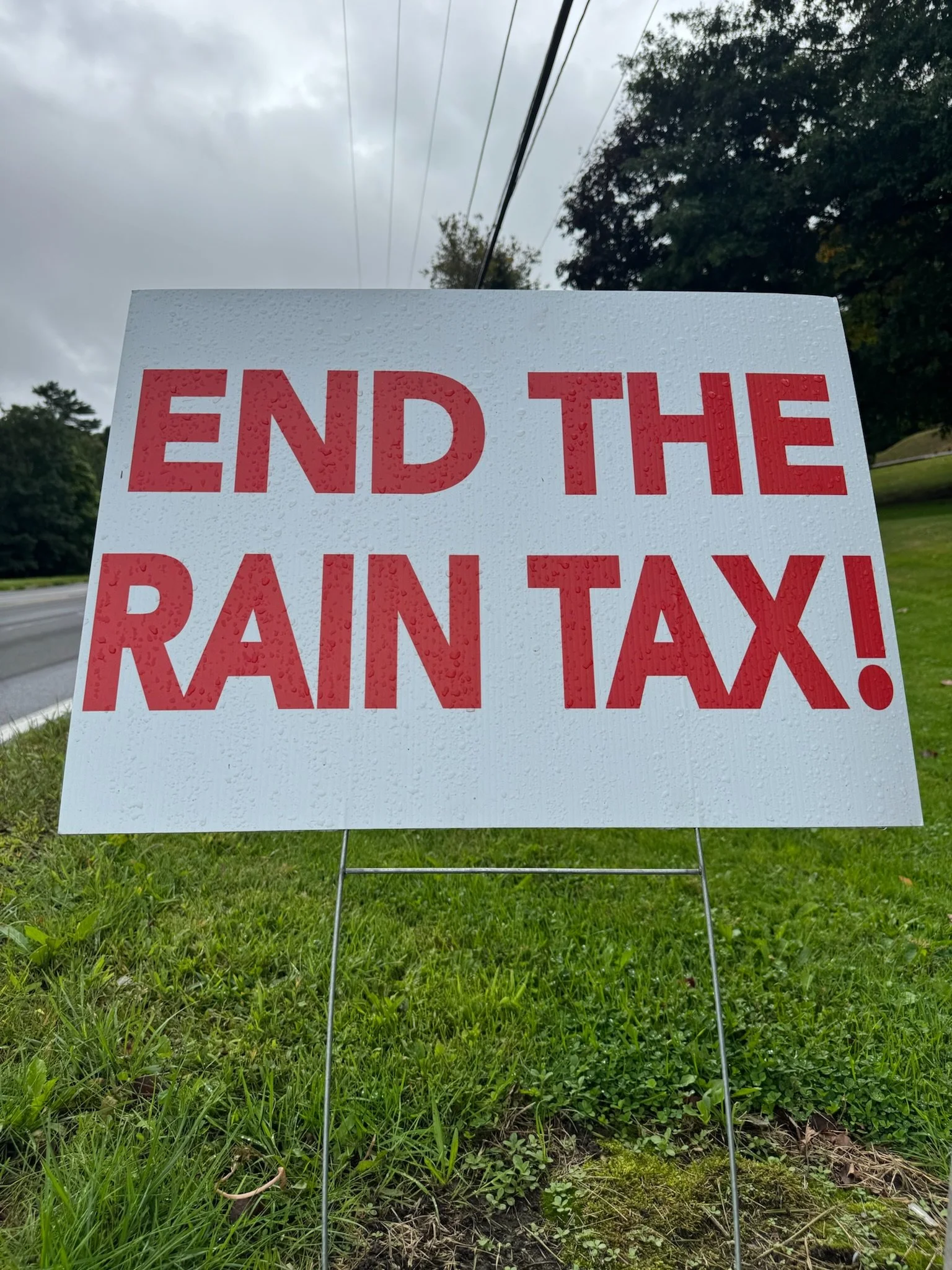
LET’S FINALLY END THE RAIN TAX!
The “rain tax” is what many neighbors call the separate stormwater bill property owners began receiving in parts of Northeastern Pennsylvania in 2019. Stormwater is rain that runs off roofs, roads, parking lots, and other hard surfaces instead of soaking into the ground. The money helps pay for work to keep polluted runoff out of local waterways and the Chesapeake Bay. [1, 2]
A 2009 executive order called on federal agencies to step up efforts to clean the Chesapeake Bay. State stormwater permits later required local communities to reduce pollution in runoff, but the permits did not set out how each community would pay for the work or maintenance. To cover those costs, a separate fee, known as the “rain tax,” was established and billed to property owners. These fees have ranged from $65 to $2,000 a year and, in some cases, unpaid bills have led to liens placed on properties. [3 - 7]
PEOPLE HAVE FOUGHT THIS BILL FOR YEARS
When rain tax bills began arriving in 2019, many residents were confused about why they were getting a new bill. Others were frustrated by the cost and worried about what would happen if they could not pay. Neighbors spoke up, formed groups, and brought their concerns to local officials. In 2020, then Congressman Matt Cartwright added his voice, writing an opinion piece addressed to President Trump urging him to end the rain tax. This fight did not start this year. [6, 8, 9]
The work to keep pollution out of our waterways still matters. Residents have been asking for a way to pay for that work without sending property owners another bill. That will take state, federal, and local leaders working together. [4, 5]
WHAT’S CHANGED NOW?
Congressman Rob Bresnahan pushed for an answer. In 2025, he brought local officials together with EPA leadership to share residents’ frustration with the “rain tax.” He pressed EPA to clarify whether federal law required the fee. In August 2025, EPA told his office in writing that it did not require a stormwater fee, though communities still had to meet water protection requirements. [10, 11]
After Bresnahan pressed the White House and EPA to act, President Trump signed a new executive order on September 16, 2026, revoking the 2009 order. The new order tells EPA to work with states to examine what stormwater fees cost residents, look for ways to protect water without raising those costs, and encourage the repeal of the fees. This opens the door to change, but it does not cancel anyone’s bill today. State and local leaders still need to find a way to pay for the required work. [11–13]
WHAT WE’RE ASKING FOR?
The clean water work still needs to be done, but property owners should not keep receiving a separate rain tax bill to pay for it. Sign the petition to urge Pennsylvania to work with EPA and local leaders on a plan that uses tax dollars already collected to fund the work. The public deserves a clear plan showing where the money will come from and when these bills could end. [4, 5, 12]
This petition asks Pennsylvania leaders to:
Review what communities in the Chesapeake Bay watershed are required to do and what the work costs.
Determine how tax dollars already collected can pay for the work without the rain tax or another fee billed to residents and businesses.
Share a public plan and timeline for ending the separate rain tax bill.
Add your name. Show Pennsylvania leaders and EPA that our communities care about clean water and want a fairer way to pay for it.
SOURCES:
EPA: Wyoming Valley communities’ stormwater requirements and funding options, 2019
WNEP: “‘End the Rain Tax’ Group Fighting Stormwater Fee,” June 2019
Matt Cartwright: “Mr. President, Kill the Rain Tax,” The Citizens’ Voice, March 2020
WVIA: Bresnahan’s meeting with EPA leadership and local officials, March 2025
Rep. Bresnahan’s office: His work on the rain tax and EPA’s August 2025 written response